


Allawee highlights three (3) reasons why the Naira is depreciating against the Dollar
9/13/2022

In recent weeks, we have experienced a weakened exchange in the parallel and the I&E, which remain the FGN major and official market for transactions. The dollar fluctuated aggressively, although it has stabilized somewhat in recent weeks. In this article, we look at the major recovered sources of FX inflows and highlight the underlying reasons behind the current FX scarcity in the Nigerian economy.
Nigeria gets its forex sources from three primary sources; Oil sales accounted for (62% of major FX inflows), Remittances (30% of major FX inflows), whilst FPIs (5%). The current FX crisis could be traced back to 2020 following the decline in oil prices and the FPI exit from Nigerian markets to safe haven instruments in developed markets. Another major source of Nigeria’s dollar inflows, remittances, also dropped, limiting the CBN’s ability to provide liquidity and assurance in the I&E window and other currency markets.
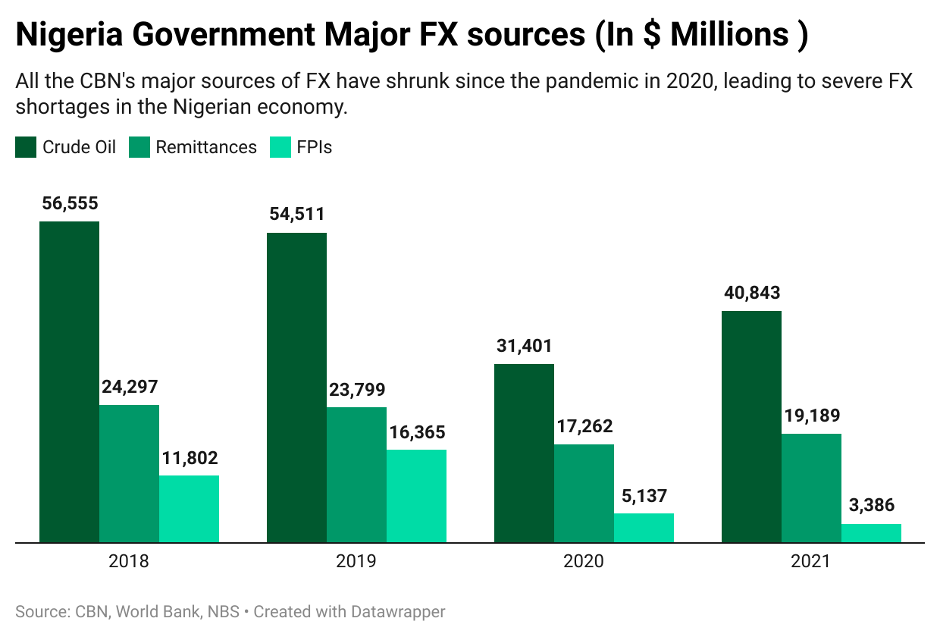
Below we highlight three significant factors that have significantly affected dollar inflows :
Capital flight across emerging markets
Following the increasingly hawkish stance adopted by major central banks, foreign Portfolio Investors (FPIs) are exiting emerging markets and marching in their troves to safe haven instruments in developed markets. This is essentially putting increasing the scarcity of dollars. The reason for this is simple: when FPI is looking to buy Nigeria financial instruments such as stocks and bonds, they exchange dollars /foreign currency with the CBN for Naira through the I&E window-NAFEX rate exchange, which has been trading around N430/$1 in recent weeks. When leaving, they also give the CBN Naira and demand their dollars.
In 2022, increased monetary policy normalization and rising interest rates have seen yields soar in more safe markets; this means these FPIs are not finding the Nigerian market attractive, and the CBN and the FGN are losing a significant source of dollar inflows. Lastly, the continued FX scarcity and illiquidity have also led to the continued disinterest of FPIs as they do not believe they would be able to exit the Nigeria markets at will if they were to purchase Nigeria instruments.
Also, since the CBN halted its bi-weekly intervention sales to Bureau De Changes (BDC), the dollar has continued to crash
In H2-2021, the CBN stopped its bi-weekly sale of Forex to BDCs, leaving BDC to source dollars from independent sources. Before this, BDCs played a vital role due to their networks in forex distribution. This policy mishap caused severe panic in the market, as banks that the CBN had put in control of distributing forex to the populace did not have the networks of adequately positioned redistributors of FX. In a year since this policy shift, Banks have been able to sufficiently provide customers from acquiring the adequate demand of the Business Travel and Personal Travel Allowances, sometimes even setting caps. The increased paperwork and red tape relating with banks have shifted demand to the parallel market, further spiking rates.
Fuel decision and Government policy direction
To understand how this works, you must have a grand understanding of the fiscal framework. Nigeria runs a centralized system where all federation proceeds from ministries, agencies and departments flow into a federation account. The FGN then proceeds across the three tiers of the government, which include the Federal, State and local governments. The NNPC is one of the government's primary sources of dollar inflows. This continued subsidy means that the landing price and ex coastal and pump price differential means that any dollar inflows are first used to settle the NNPC’s obligations regarding subsidies before the remainder is channelled to the federation account.
Our Outlook for Forex is bearish
Going forward, we remain bearish on the outlook for the forex situation; this is following the expected capital flight in the Nigerian economy. First, although pump prices have recently increased, the FGN and NNPC remain the major PMS importer, which continues to weigh on dollar flows. FPI will remain essentially floored despite the CBN's recent aggressive monetary policy stances, as major central banks will continue to adopt aggressive monetary policy stances. Lastly, unless the CBN is willing to relax the stringency of its FX policy windows, it flows from non-exporting, and other players will remain flat.